Yoga Classes
Yoga is an opportunity to study all aspects of self, mental, physical, energetic, and spiritual. When I roll out my mat, I look for an opportunity to connect my body, mind, and spirit in a collaborative conversation. It helps me discover where I am at and what I need to do to move forward.
Yoga is a Method of Self Care.
As a yoga teacher, I encourage you to have a compassionate conversation with your body and mind. In my yoga class, I share what I have learned so that you can discover ways to move safely while supporting your individual limitations and strengths.
Benefits of Yoga:
Yoga Helps You to Become More Accepting of Yourself.
I guide you to become aware of the sensations of internal support by focusing on core strength and the mental experiences that co-exist within your experience of developing a balance of strength and flexibility. The judgements and expectations you place on yourself are part of learning to approach your practice with compassion and support. Thus, my classes offer continual reminders and opportunities to respect your limitations and practice self-acceptance.
Yoga Keeps Your Body Healthy and Allows You to Maintain an Active Life.
In the Yoga Sutras of Patanjali it is said that yoga should be both Sthira, steadfast or effortful, and Sukha, with ease. The balance of these two qualities creates an experience that is physically enjoyable and complexly nuanced with many flavours and choices of sensation. Yoga not only feels good in your body, the muscular benefits of pliability, balance, endurance and competency enhance your overall sense of well being.
Yoga Helps Create an Inner Peace of Mind.
The benefits of practicing yoga on a regular basis go far beyond the physical advantages mentioned above. A major goal of practice is to explore and nourish your state of mind in search of an inner place of rest, ease and support.
Breathing exercises and yoga postures are tools for remembering the inner place of rest. They teach the mind to focus on sensation with curiosity and kindness. Accessing that inner place of focus even momentarily alleviates pressure, judgment, and concern, allowing the practitioner to experience ease, acceptance, and peace.
Continual practice teaches your brain to go more easily into rest. Over time, the experience of self-acceptance often increases, helping to improve your ability to respect the imperfections of others as well.
I Teach Yoga Within a Physical and Psychological Framework.
I Take Into Consideration Differing Learning Styles When Teaching Yoga.
As a teacher, I am aware that there are four dominant learning styles: auditory, visual, kinesthetic, and tactile.
To be inclusive and meet all of my students’ learning styles, I use:
- Visual cueing, both physically by demonstrating the pose and mentally through the use of imagery
- Spoken (auditory) instruction,
- Kinesthetic opportunities to play with movement
- Tactile exploration by encouraging you to check positioning predominantly with your hands on your body.
The above results in an informed ability to weave sensation, imagery, physical knowledge, mental awareness, and compassion into a practice that students at all levels can enjoy.
My Personal Experience with Yoga Informs My Teaching Style.
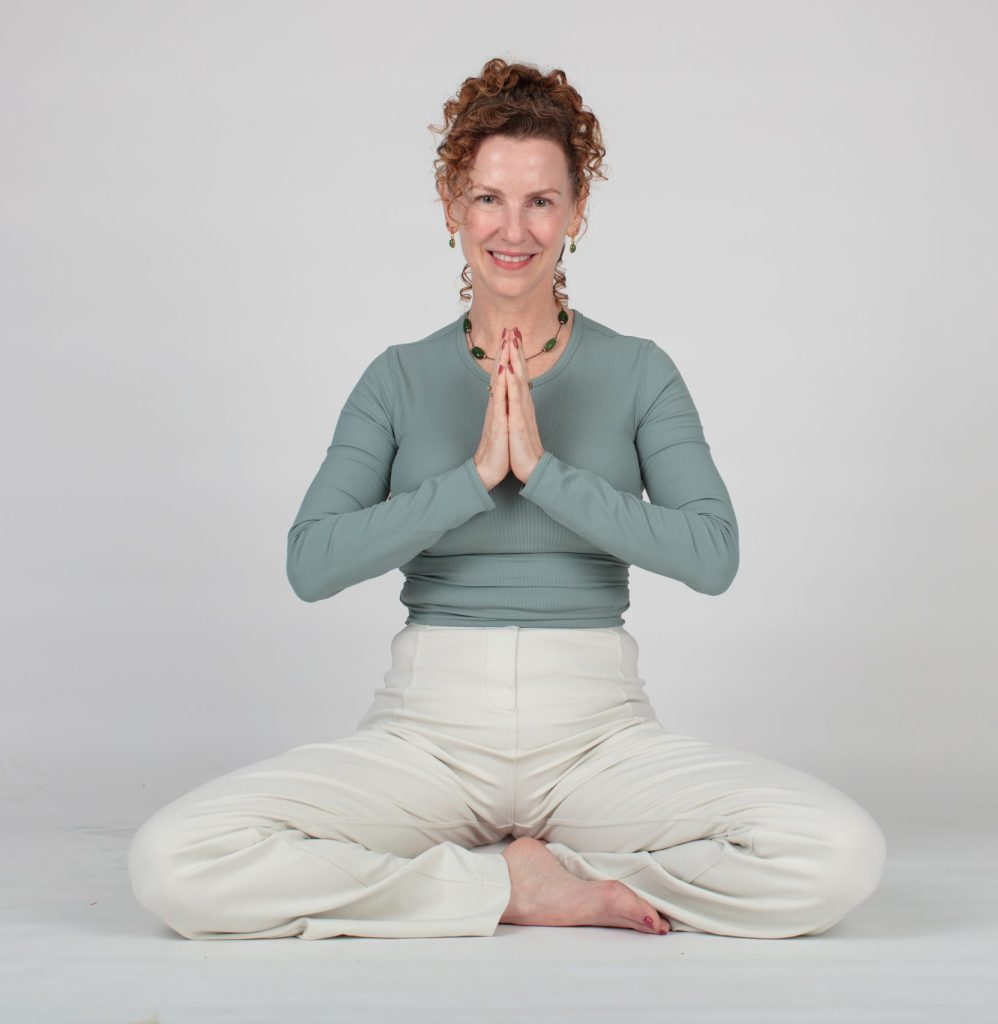
My yoga practice has informed my work both as a yoga teacher and therapist. What I teach has evolved through and become grounded mentally, physically and spiritually in my practice of yoga.
Over the 35 years that I have been studying movement and practicing yoga, I have experienced physical limitations, given birth twice, and reconstructed my sense of self through many challenging life experiences.
- See your limitations and suggest modifications
- Recognize the challenge of practicing with self-acceptance and ease so that you don’t injure yourself, and to
- Empathize with frustration that naturally occurs when things do not go as expected.
These skills support my students to follow through with their commitment to self-care.
Currently not teaching – watch for updates in 2025
Yoga and Movement Training
- Vijnana Yoga International 800 hour 2013
- Pheonix Rising Yoga Therapy 600 hour 2004
- David Swenson Ashtanga 2002
- Prana Yoga Power Yoga 150 hour 2001
- Prana Yoga Hatha Yoga 500 hour 2000
- Physical Mind Institute Pilates Equipment 1999
- Physical Mind Institute Pilates Mat 1999
- BCRPA Group Fitness 1990 – 2002